AI-powered learning platform case study: the origin of Quino
This AI-powered learning platform case study begins long before Quino became a funded edtech startup with tens of thousands of users. The initial idea was born out of a personal frustration: learning Romanian as a second language in 12th grade. Traditional study methods felt static, inefficient, and disconnected from how students actually retain information. To solve that problem, I built a simple learning assistant that transformed static academic content into something more interactive and engaging.
Years later, that early experiment evolved into Quino, an AI-powered learning platform targeted at students and higher education. What started as a personal tool became a full-scale product used by over 100,000 learners, generating approximately $50k ARR and reaching around $4k MRR at its early revenue peak. This from 0 to 100k users SaaS growth story was driven by a combination of strong product-market fit, close user relationships, and a willingness to build technically complex systems before they were mainstream.
Quino was not built during the ChatGPT hype cycle. The first production RAG prototypes were implemented in 2022, at a time when retrieval-augmented generation was not yet a buzzword in edtech. That early technical bet became a defining advantage for both the product experience and the business trajectory.
What Quino does and why it resonated with students
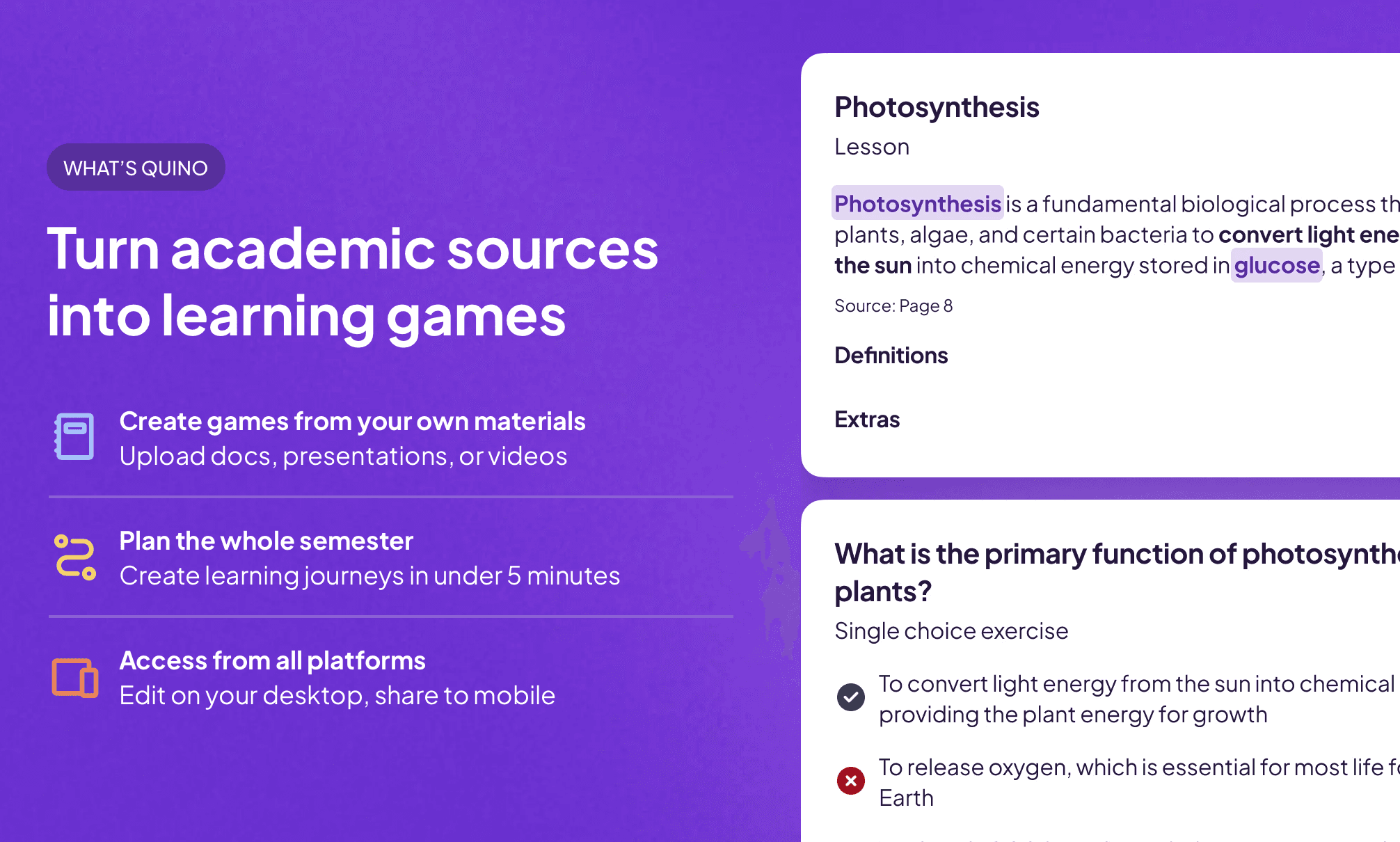
At its core, Quino turns academic sources into interactive learning experiences. Students and educators could upload documents, presentations, or even videos and transform them into learning games and structured lessons. Instead of passively reading material, users actively engaged with content through quizzes, spaced repetition, and guided learning journeys.
The platform allowed users to plan an entire semester in advance, reviewing and scheduling learning games in just a few minutes. Learning journeys could be created in under five minutes, edited on desktop, and shared seamlessly to mobile. This cross-platform flexibility was critical for adoption in higher education environments, where students constantly switch devices.
This functionality played a major role in the from 0 to 100k users SaaS growth story. In the first two weeks after launch, Quino reached 35,000 users organically, without initial monetization. The surge in usage was so intense that the engineering team had to rewrite significant parts of the system to handle the load. This early traction validated both the product vision and the underlying RAG retrieval augmented generation edtech startup approach.
Building an AI study tool with RAG technology before it was mainstream
A defining aspect of Quino’s success was building an AI study tool with RAG technology well before it became widely adopted. The platform processed user-provided study materials and answered questions by retrieving relevant context from uploaded sources rather than relying solely on generative output. This significantly improved accuracy and trustworthiness for academic use cases.
The RAG system was architected using vector databases for semantic search, combined with GPT-3 for generation. WebSocket-based streaming was implemented to deliver real-time AI responses, creating an experience that felt immediate and conversational even under heavy load. This technical choice added complexity but paid off in user engagement and retention.
As a RAG retrieval augmented generation edtech startup, Quino demonstrated that retrieval-first AI systems were essential for education, where factual grounding matters. The production RAG system supported thousands of concurrent users and generated revenue, proving that advanced AI architectures could scale reliably in real-world learning environments.
Product, growth, and user-driven execution
From a business perspective, Quino’s growth was tightly coupled with its product process. A Discord community with thousands of members became a direct feedback channel. Weekly user interviews were conducted using the Mom Test framework to avoid biased insights. The product was heavily dogfooded internally, ensuring that real learning pain points were addressed continuously.
A single North Star metric guided decision-making, preventing the team from optimizing vanity metrics at the expense of learning outcomes. Analytics tools such as Mixpanel, Google Analytics, and Umami were used to understand user behavior across the funnel. This disciplined approach helped convert early hype into sustainable usage and revenue.
This AI-powered learning platform case study highlights that rapid growth is rarely accidental. The early 35,000-user spike could have been wasted without tight iteration loops and infrastructure upgrades. Instead, it became the foundation for scaling to over 100,000 users and establishing a credible SaaS business.
From early traction to pre-seed funding
The combination of strong early traction, a working RAG system, and a clear vision for education enabled Quino to raise $840,000 in pre-seed funding. This AI edtech startup pre-seed funding journey was anchored in demonstrated execution rather than theoretical potential. Investors could see real users, real revenue, and real technical differentiation.
By the time funding was secured, Quino had already reached around $4k MRR and proven its ability to monetize. The product was no longer an experiment but an operational SaaS platform. The funding round supported further scaling, infrastructure improvements, and deeper exploration of AI-driven learning workflows.
This AI edtech startup pre-seed funding journey underscores an important lesson: raising capital becomes significantly easier when advanced technology is paired with measurable adoption and revenue. Quino’s story shows how early technical bets on RAG can translate directly into business credibility.
Lessons from Quino’s journey
Looking back, Quino represents a complete from 0 to 100k users SaaS growth story grounded in both engineering depth and user empathy. Building an AI study tool with RAG technology before it was popular created a durable advantage, especially in education where correctness and context matter.
The platform’s evolution from a 12th-grade side project to a funded edtech startup illustrates how personal pain points can scale into meaningful products. By focusing equally on business fundamentals and advanced AI architecture, Quino demonstrated that early-stage startups do not have to choose between innovation and execution. This balance ultimately defined its impact in the AI-powered learning space.